Key findings
What the data tells us
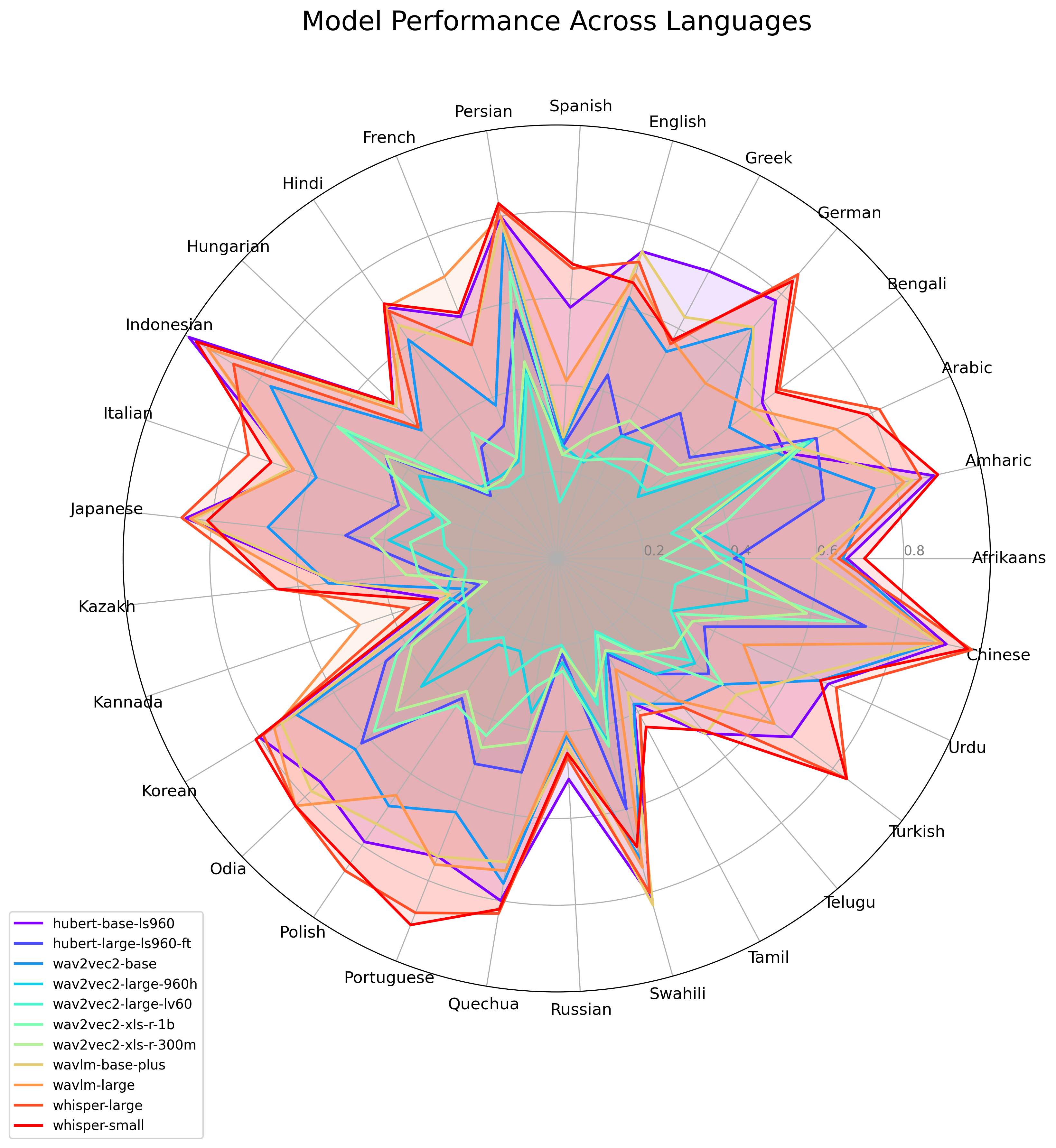
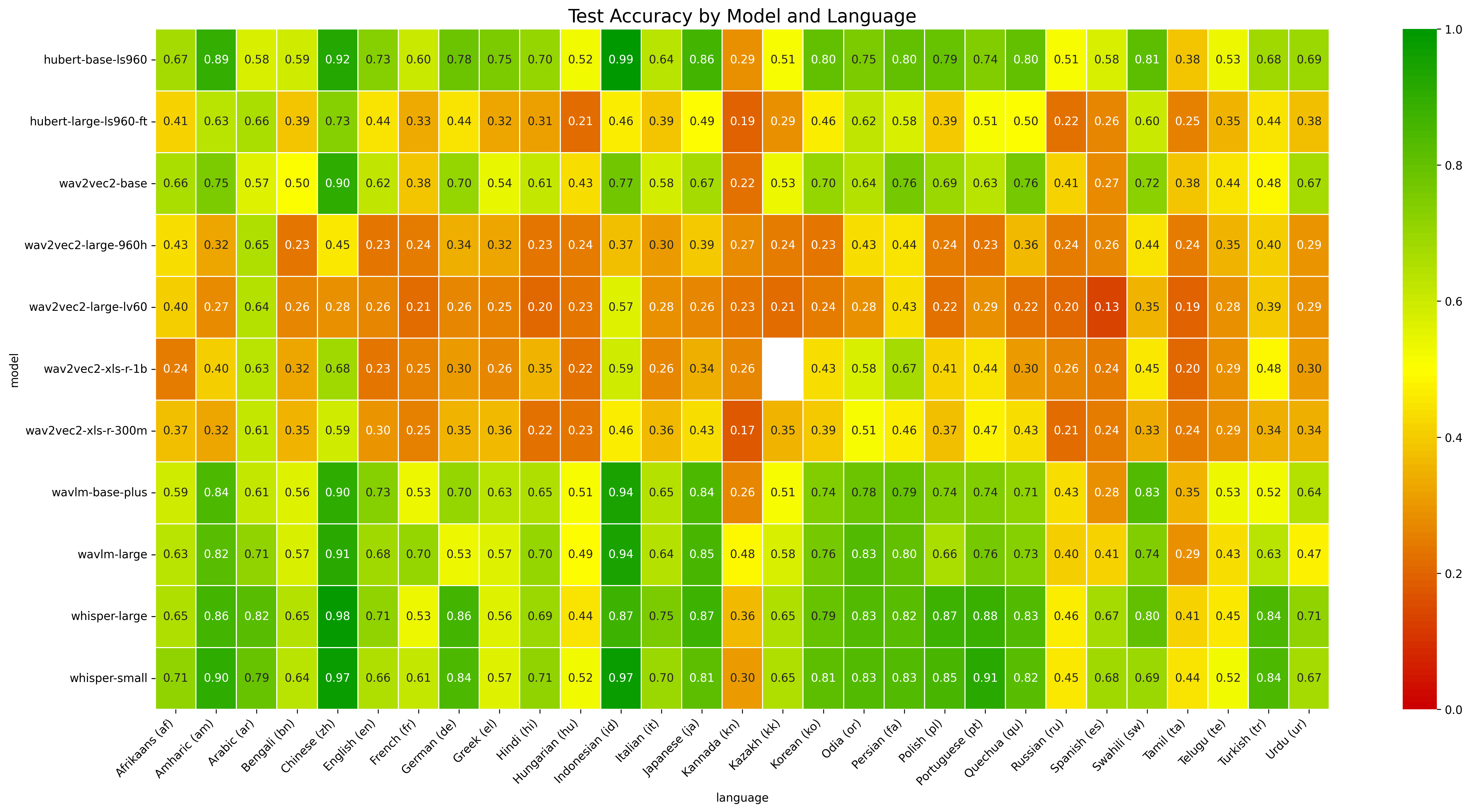
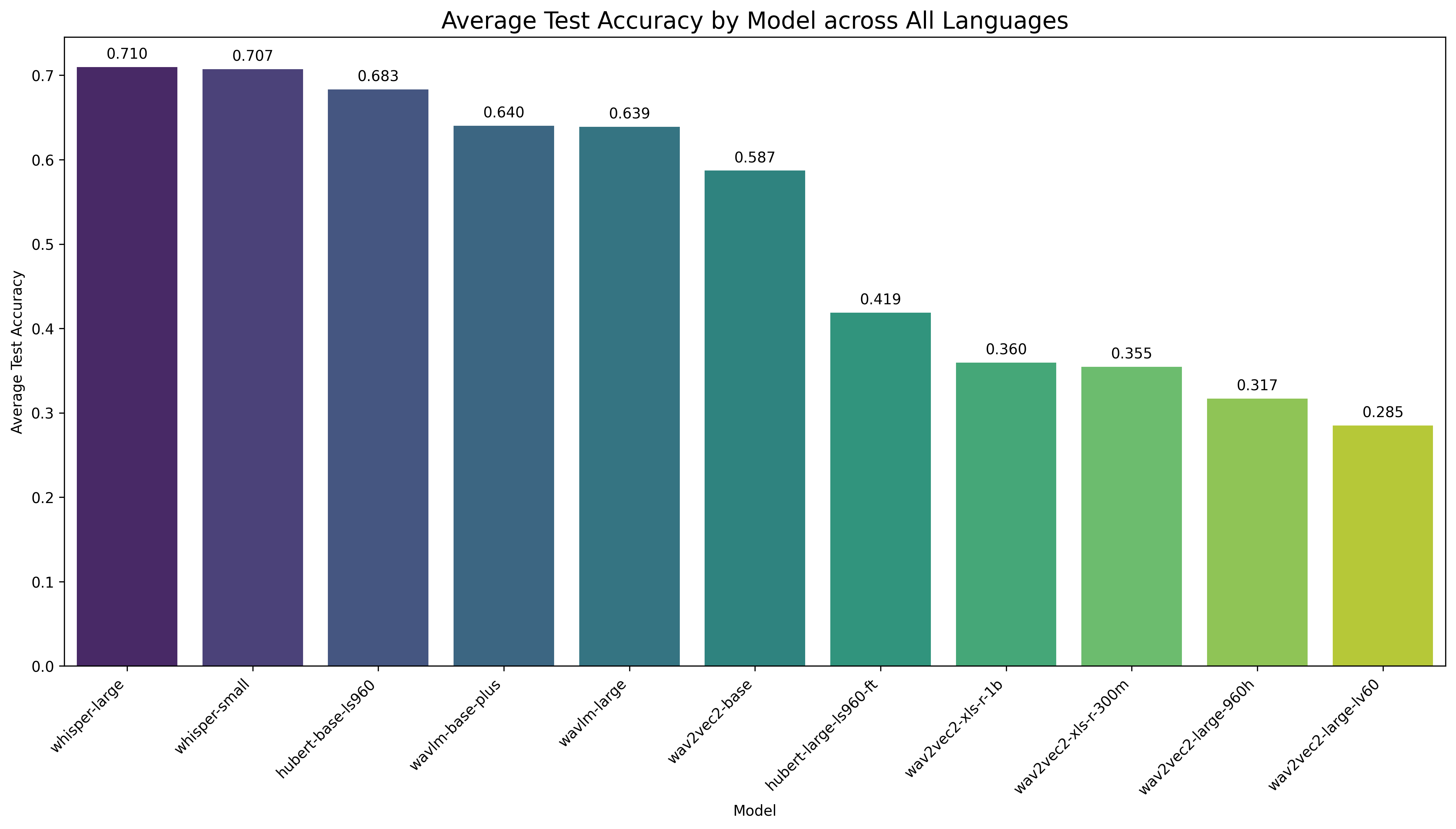
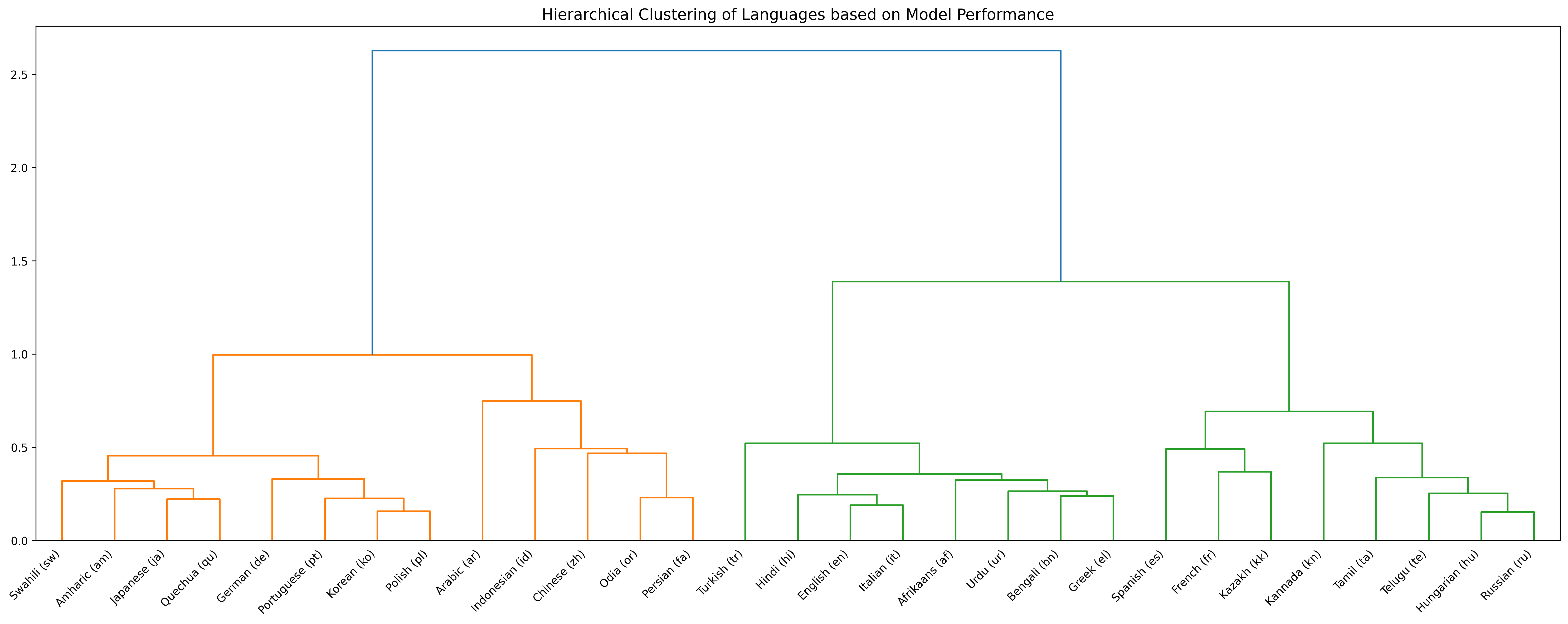
A glimpse of the analysis. Click any figure to enlarge, or dive into the full interactive benchmark.
KuralHub catalogs and benchmarks Speech Emotion Recognition (SER) datasets across the world's languages — from high-resource to long-tail — so researchers can find data and compare models in one place.
Speech Emotion Recognition research is fragmented: datasets are scattered, inconsistently documented, and heavily skewed toward a handful of high-resource languages. KuralHub brings them together.
We reviewed Speech Emotion Recognition resources for 70+ languages, documenting 90+ datasets with consistent metadata — emotion categories, speaker counts, recording conditions, licensing, and access links. For 29 languages with usable open data, we ran a controlled benchmark: each of 11 pretrained speech encoders is fine-tuned per language (monolingual, not multilingual) by attaching a lightweight classification head on top of the frozen backbone, then evaluated on held-out test sets.
The result is a living atlas that helps researchers and practitioners locate datasets quickly and choose the right model for a given language.
Consistent, structured metadata for 90+ SER datasets — emotions, speakers, license, and access links — organized by language and family.
11 state-of-the-art speech models fine-tuned per language under one protocol, with validation and test accuracy reported transparently.
From English and Mandarin to long-tail languages across 12+ language families — surfacing where emotion data exists and where gaps remain.
A single, controlled fine-tuning protocol applied consistently across every language and model.
Gather open SER datasets per language and normalize their emotion labels, splits, and metadata into a common format.
Freeze each pretrained speech encoder and train a classification head on top — one monolingual model per dataset, never mixed multilingual.
Score validation and test accuracy on held-out splits and aggregate results by model, language, and language family.
A glimpse of the analysis. Click any figure to enlarge, or dive into the full interactive benchmark.
Department of Computer Science & Engineering, University of Moratuwa, Sri Lanka — aaivu research lab.
KuralHub is a comprehensive survey and benchmark of Speech Emotion Recognition (SER) datasets across the world's languages. It catalogs 90+ SER datasets spanning 70+ languages and benchmarks 11 pretrained speech models on 29 languages, to help researchers find emotion-speech data and choose the best model for a given language.
KuralHub documents 90+ SER datasets across 70+ languages — including English, Mandarin Chinese, Hindi, Arabic, Spanish, German, French, Japanese, Korean, Tamil, Telugu, Bengali, Persian, Turkish and many low-resource languages. Each dataset entry lists its emotion categories, speaker counts, license and access links. Browse the full catalog on the Datasets page.
There is no single best model — the top encoder is language-dependent. KuralHub fine-tunes 11 pretrained speech models (HuBERT, wav2vec 2.0, WavLM and Whisper variants) per language and reports the winner for each. See the best model per language on the Benchmark page.
Many of the cataloged SER datasets are openly available, while others require a request or agreement with the original authors. Each dataset page states its license and access method. Always check the original dataset's license before research or commercial use.
Speech Emotion Recognition (SER) is the task of automatically identifying a speaker's emotional state — such as happy, sad, angry, fearful or neutral — from their voice. It is a core problem in affective computing with applications in human–computer interaction, call-center analytics, healthcare and accessibility.
KuralHub will appear at Interspeech 2026. Use the BibTeX entry in the citation section; final details will be added once the paper is published.
@inproceedings{kuralhub2026,
  title     = {KuralHub: A Comprehensive Review of Speech Emotion Recognition Datasets},
  author    = {Thavarasa, Luxshan and Thevakumar, Jubeerathan and
               Sivatheepan, Thanikan and Thayasivam, Uthayasanker},
  booktitle = {Interspeech},
  year      = {2026},
  note      = {To appear}
}
Accepted at Interspeech 2026 — full citation details will be finalized once the paper is published.